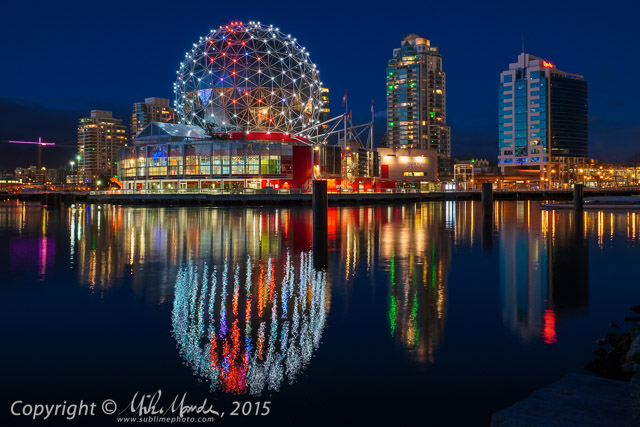
Sunday, March 22, 2015

Gallery: Fujifilm XF 18-55mm f/2.8-4R LM OIS Revisited...


Before I get into this main topic of this post, let me point out a few changes I made to this blog today. The separate links section on right side of the page has been removed and in its place, a list of image galleries has been added. These will filter the blog and only show postings that have links to image galleries for the relevant year. In addition, I have edited the main "SHOW" menu at the top of the blog, to remove the beauphoto blog entry link and put in its place, a "Major Trip/Event" link which will filter the blog to show only entries relevant to either a major photography trip I have been on, or for a major event I have photographed, like galleries related to the 2010 Olympics for example. The links have now all be moved to a "Links Elsewhere" page, which has been revised as well. Okay, so now to the main topic...

Above is a link to a gallery of images from Fujifilm's XF 18-55mm f/2.8-4R LM OIS zoom lens. I used to own that lens but sold it along with my X-E1 body well over a year ago. After selling it, I actually missed having a mid-range "walk-around" zoom, but had decided to wait for Fujifilm's XF 16-55mm f/2.8 pro-series zoom to arrive. As impressive a lens as the new 16-55mm is overall (a review of that lens is also coming), after testing it I decided not to get it after all. It was simply too big and heavy for me to have any interest in carrying it around on a regular basis! So, when I recently ordered myself a second X-E2 body, I decided at the last minute to order it with the 18-55mm kit zoom. I am actually quite impressed with the little 18-55mm and it seems better optically than I remember it being...

Sunday, March 15, 2015

Gallery: Southwest 2010 / Day 15


Gallery (45 images): Southwest 2010 / Day 15

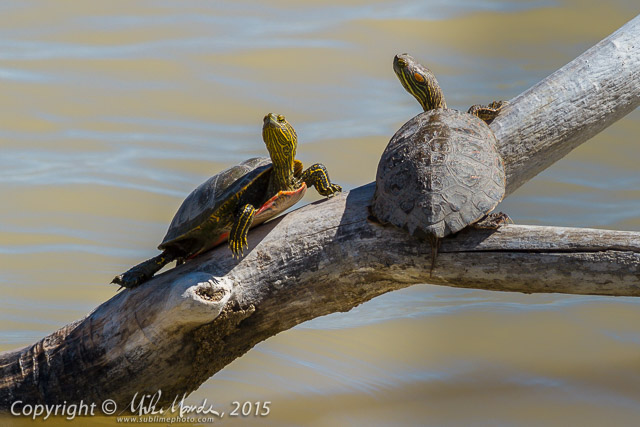
Three interesting places, visited in one day! Firstly, the Bosque del Apache National Wildlife Preserve (with lots of basking turtles as above), next the Very Large Array (VLA) facility, a part of the NRAO, or National Radio Astronomy Observatory and finally, an evening photographing the bluffs at El Malpais National Monument.

All posts from this trip: Southwest 2010

Wednesday, March 11, 2015

Gallery: Southwest 2010 / Days 13 & 14


Gallery (40 images): Southwest 2010 / Days 13 & 14

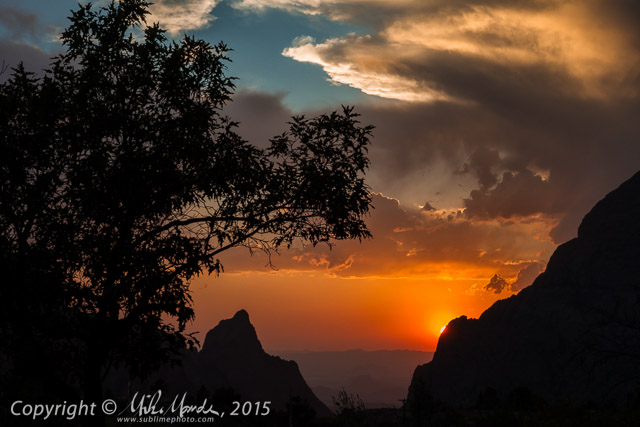
The above photo was taken at sunset, near Chisos Basin in Big Bend National Park. The gallery contains images taken in the park, along the Rio Grande River and then also further north at McDonald Observatory, featuring the huge 10 meter Hobby•Eberly telescope.

All posts from this trip: Southwest 2010

Sunday, March 1, 2015

Gallery: Southwest 2010 / Days 10 - 12


Gallery (50 images): Southwest 2010 / Days 10 - 12

The above photo was taken in Big Bend National Park, however the gallery starts with two more observatory visits. Day 10 saw us first visit Sacramento Peak Observatory and then Apache Point Observatory. We decided to take a back road out towards the south to return to the campground near White Sands, however this proved a very rough and long route, pretty much killing the rest of the day. In addition, we ended up accidentally driving through a military range and at one point, a convoy of Hummers and other military trucks came up behind us, thankfully just driving by when I pulled over to let them pass. The next day we did more driving than photography, first over to Carlsbad Caverns and then, at that point, we made the decision to head south towards Big Bend National Park. The next day was mostly driving as well with some gorgeous evening light and storm clouds which greeted us, once we reached Big Bend NP...

All posts from this trip: Southwest 2010

Saturday, February 28, 2015

Gallery: Southwest 2010 / Days 8 & 9


Gallery (90 images): Southwest 2010 / Days 8 & 9

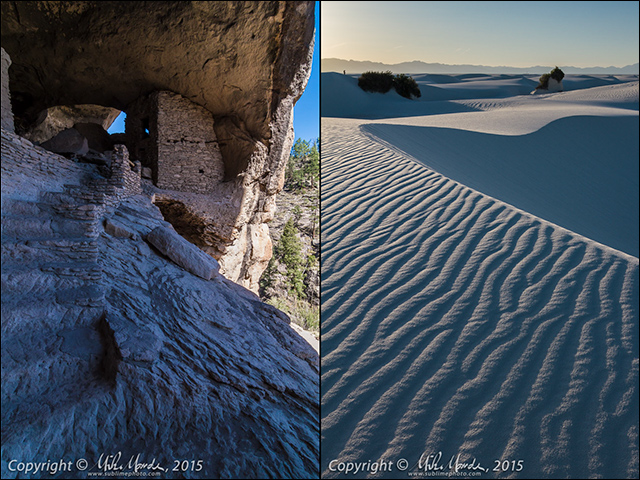
Two major National Monuments in New Mexico comprise this new gallery of images from days 8 & 9 of our trip, the first being Gila Cliff Dwellings, the left image above, and the second White Sands on the right. For more info on White Sands, see the description in the gallery.

The dynamic range of photos taken at the Gila Cliff Dwellings was a challenge. The ruins were in the shade under a deeply overhanging cliff and yet the beautiful exterior landscape was often visible in wide-angle shots, with lovely blue skies and trees that would be a shame to let blow out. I remember working on these images back in 2010, with a much older version of Adobe Lightroom, and found it challenging to get anything that looked decent from many of the shots. The sky was often bleached white and the lifted shadows were noisy. I must say, Adobe has come a long way with its image processing in Lightroom over the years, and while I am not a fan of how it handles my more recent Fujifilm X-Trans raw files, it does do a pretty good job of my older Canon EOS-7D raw files with their standard Bayer-pattern pixel layout...

All posts from this trip: Southwest 2010

Wednesday, February 18, 2015

Gallery: Southwest 2010 / Days 6 & 7


Gallery (50 images): Southwest 2010 / Days 6 & 7

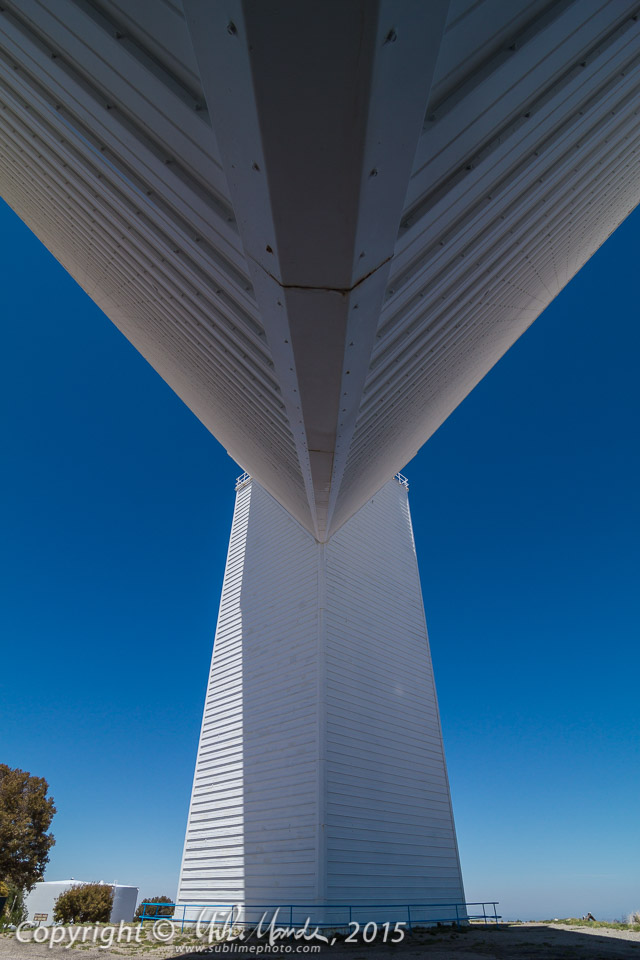
On day 6, we travelled east from Organ Pipe Cactus National Monument, over to Kitt Peak National Observatory, with an interesting view of the McMath-Pierce Solar Telescope shown in the above shot. This was a trip of visiting observatories and there are many more photos of telescope domes to come in the following days. After Kitt Peak, it was over to New Mexico, where we camped at City of Rocks State Park...

All posts from this trip: Southwest 2010

Saturday, February 14, 2015

Gallery: Southwest 2010 / Days 4 & 5


Gallery (65 images): Southwest 2010 / Days 4 & 5

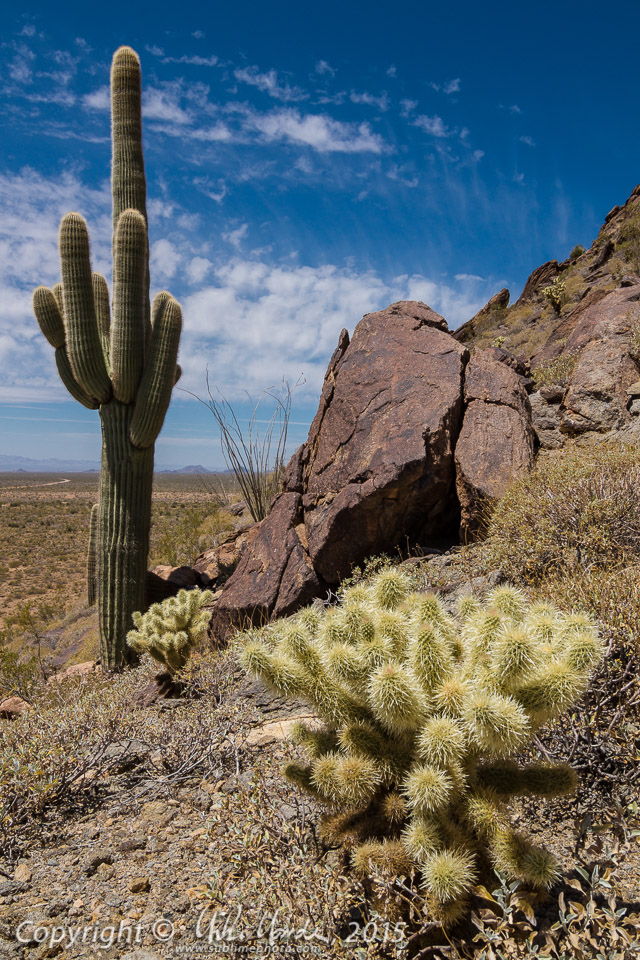
The next two days of travel took us through Arizona, from Yucca and Wickiup in the northwest, to Organ Pipe Cactus National Monument, bordering on Mexico. There was lots blooming; cacti, shrubs and even Giant Saguaro.

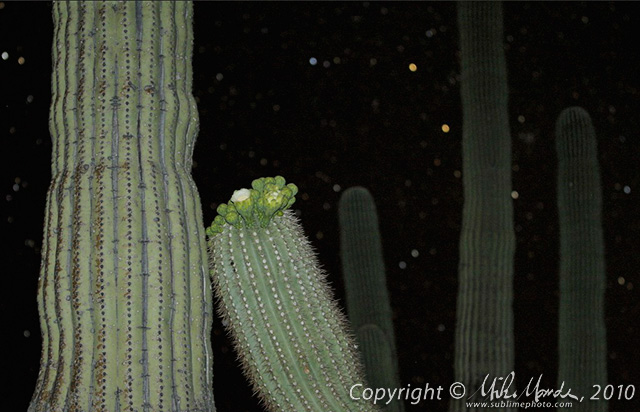
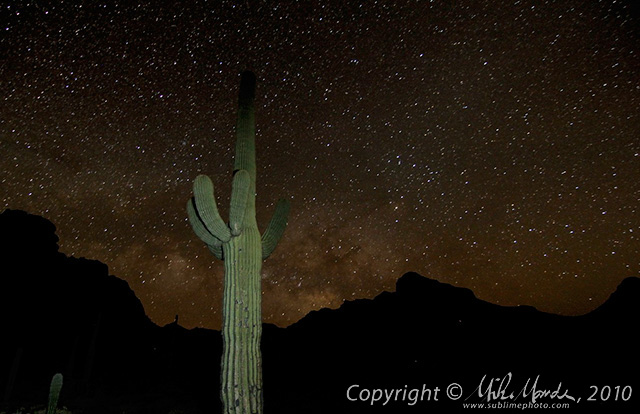
At the backcountry campsite in Organ Pipe Cactus NM, there was an opportunity to photograph a time-lapse of a Saguaro blooming at night. I set my Canon 7D up with a 430EXII flash, and photographed the Saguaro for a few hours, with the blurred stars moving in the background. Photo 62 in the above gallery shows a wide view of the cactus I photographed. It is hard to tell, but if you rapidly sweep the movie slider back and forth, you can see one bloom opening. Click below to open the time-lapse in a new window (you will need to have Quicktime installed)...


Finally, since it was so warm and dry, I decided to set up the camera to do an overnight time-lapse which captured the Milky Way rising behind a lone Saguaro, all the way through until morning...


All posts from this trip: Southwest 2010

Monday, February 9, 2015

Gallery: Southwest 2010 / Days 1 - 3


Gallery (65 images): Southwest 2010 / Days 1 - 3

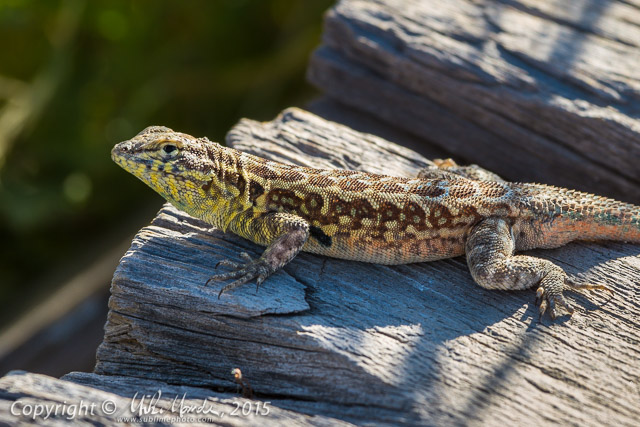
I may have mentioned before how far behind I am in processing trip images? The last big trip I completely finished editing and processing was Germany in 2011 and now I am going back even further, starting on my US Southwest trip from May 2010 with my friend Bill. We made it all the way down to Big Bend National Park in Texas that year, on the Rio Grande river at the Mexican border. The colourful lizard above is one of many I saw at the Antelope Valley California Poppy Reserve on day three.

All posts from this trip: Southwest 2010

The last fully processed set of trip images were those from my Southwest 2009 excursion, and that one is still on my sublimephoto.com website, which ends with galleries shot in 2009. I actually have one more earlier trip to process, a solo one down to southern California in March of 2010. However, I decided to work on this one first since I may be heading back down to Texas, this year in spring, so I wanted to remind myself of the locations I visited last time.

I thought this might be an opportune time to mention some of the gear transitions I've been through in the last few years...

That May 2010 vacation is actually the last major photo trip I did with my Canon system, even though I didn't switch to Nikon until late 2012. I had been shooting with Canon digital SLRs since 2004, starting with an EOS-20D, then moving to a 30D, 40D, 50D and lastly the 7D. On this US trip in 2010, my Canon kit was comprised of an EOS-7D body and an IR-converted EOS-20D (my original 20D), with a Tokina 11-16mm f/2.8, then the Canon lenses, a TS-E 17mm f/4L tilt-shift, the EF-S 15-85mm kit zoom, an EF 24mm f/1.4L II, an EF-S 60mm f/2.8 Macro, an EF 70-200mm f/4L IS and finally an EF 400mm f/5.6L.

This was a substantially big an heavy kit, which is why I decided to lighten my load for my trip to Germany in 2011 with a combination of Panasonic and Fujifilm gear...

Wednesday, February 4, 2015

Gastown photo walk with the Fuji Guys...


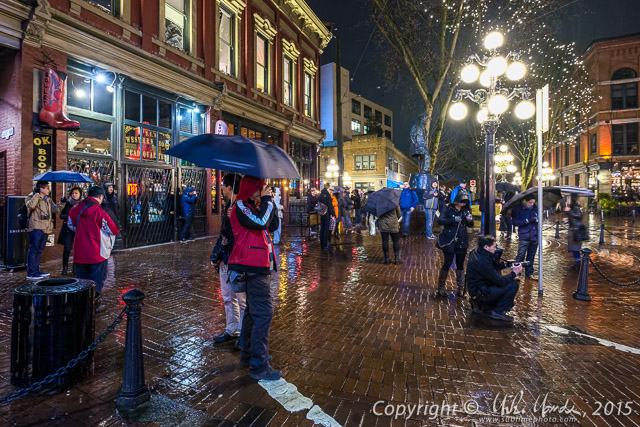
Pleasant company in unpleasant weather! That's how I'd describe the night out with Fujifilm, on a photo walk through Gastown in Vancouver with about 50 people and numerous Fujifilm reps, as well as Fujifilm Canada's new president. Lots of enthusiastic X-shooters turned out despite the rainy weather and, in fact, I'd say nearly all the people in the above photo were attendees. Click the image to see a gallery of 25 shots from that night...

Sunday, February 1, 2015

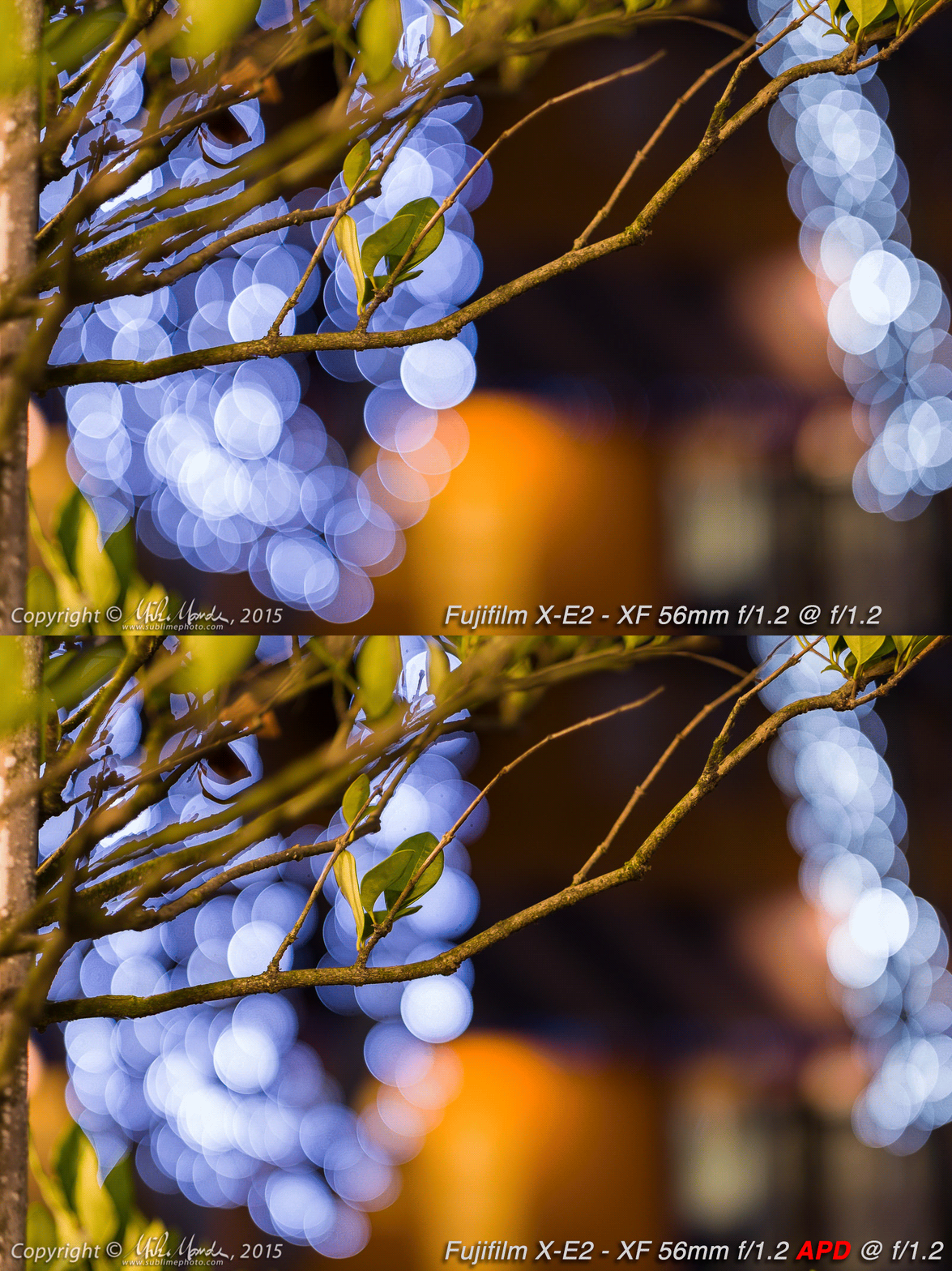
Fujifilm's Fifty-Sixes Compared! The APD Effect…


A large version of the above here: APD-f1.2-lights.gif

Fujifilm has two versions of the their 56mm lens, the regular Fujinon XF 56mm f/1.2R and the Fujinon XF 56mm f/1.2R APD, one that has an internal apodization (APD) filter. Before I get into the technical lens details, let me mention that you'll see a number of animated GIFs in this blog posting that are comparisons between those two lenses wide open at f/1.2. Note that GIFs only have 256 colours in total and are dithered to allow them to display a 24-bit colour image. This dithering can be visible as some roughness or even slight banding in these animations. Also, for those who just want to dive in and look at images, here is a link to the full gallery with all the photos mentioned in this posting, each carefully shot at seven different f-stops with both lenses - 70 images in total!

GalleryFujifilm's Fifty-Sixes Compared! The APD Effect…

I chose to test the lenses at third-stops from f/1.2 to f/2 and then go right to f/2.8 and finally f/4 since the effect becomes so minimal once you stop down past f/2.0. The photos in the sample gallery were all shot on a tripod, with the two 56mm lenses changed carefully as to not move the camera. For some reason, I did notice a hint of movement on some sets that was likely my forgetting to sufficiently tighten the panning-lock on my ball-head, however, there was definitely a distinctly different "aim" to both 56mm lenses, something I found a bit unusual. Even though the shift was only slight, it was bothersome enough that on all the photo groups, I carefully cropped them ever so slightly, then nudged the crop frames around until I got the best superposition of the regular set with the APD set. While this was rather tedious, luckily Lightroom made it fairly painless. Once I had the f/1.2 versions aligned, I could just sync the crop settings on each group of smaller f-stops.

In order to show some of the bokeh effects more obviously, I heavily cropped two sets in the gallery, namely photos 15-28 and 57-70. On those, the frame you see is roughly a third the area of the whole field-of-view. All the others only have a tiny bit of cropping, just enough so I could achieve perfect alignment of each set of shots, well almost perfect at least. Lastly, there was some movement of branches due to wind, especially in photos 43-56.

For some less technical and more aesthetic samples, see this blog posting from a week earlier...

PostNicole with the Fujifilm XF 56mm f/1.2R APD

So, now for some details of what makes Fujifilm's 56mm APD lens (almost) unique...